
Most Battlefield 6 players grind for hundreds of hours and still end up on the wrong side of the scoreboard. It’s frustrating, especially when the gap between you and the top squad feels invisible.
The truth? Winning at a high level in BF6 isn’t about reaction time alone. It’s about three things working together: running the right meta setup, making smarter macro decisions, and squeezing every performance advantage out of your settings.
This guide breaks down exactly what’s working in Season 2–3 and beyond — weapons, positioning, sensitivity, and the habits that actually separate high-winrate players from the pack.
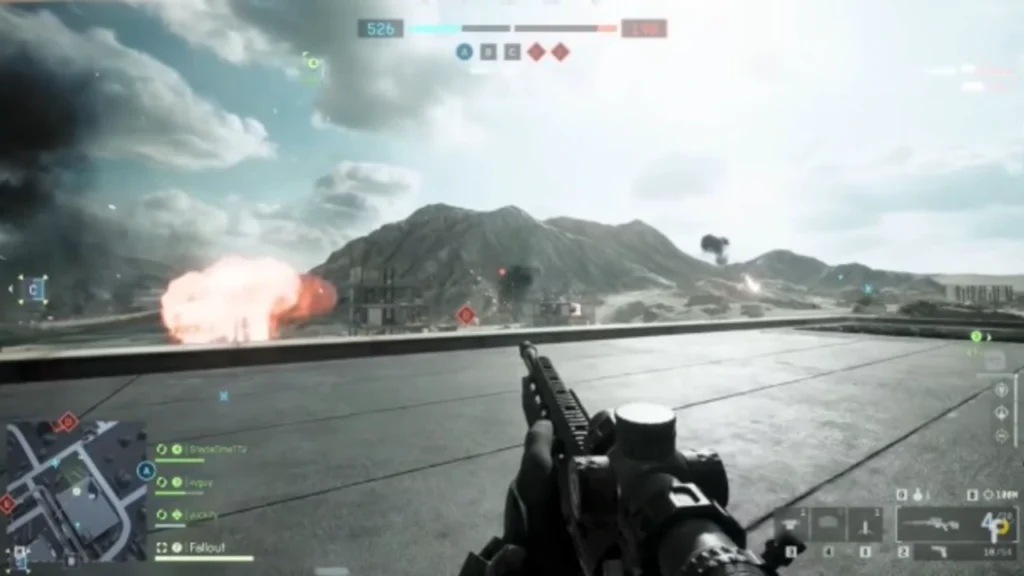
The Current Meta: Weapons That Actually Win
Before diving into builds, here’s the honest reality — role discipline and positioning matter more than gun choice. A well-placed player with a B-tier weapon beats a clueless player with an S-tier one every time. That said, the right weapon makes everything easier.
These are the competitive picks dominating both standard multiplayer and RedSec ranked right now.
KORD 6P67 (Assault Rifle)
Consistently rated the top AR across stat sites and tier lists. It’s the go-to flex weapon for players who rotate between lanes and cover multiple angles as a squad leader. For a Season 2 meta build, run: RO-M 1.75x scope, Long Suppressor, 415mm Prototype barrel, Classic Vertical grip, 36-round mag, and FMJ ammo.
USG-90 (SMG)
The entry fragger’s best friend. Fast fire rate, great mobility, and it excels at close-quarters objective pushes and flanks via off-meta routes. Pair it with: Mini Flex 1.0x, Lightened Suppressor, 264mm Fluted barrel, 50 MW Blue laser, 50-round mag, and Polymer Case ammo.
M4A1 (Carbine)
Arguably the most flexible gun in the game right now — comfortable from close-to-mid range and forgiving enough to use across most map types. Recommended build: Baker 3.0x, Lightened Suppressor, 14.5″ Carbine barrel, 6H64 Vertical underbarrel, 36-round mag, FMJ.
DRS-IAR (LMG)
The anchor player’s weapon of choice. Fast ADS for an LMG, controllable sustained fire, and it locks down sightlines better than almost anything else in class. Build: CCO 2.0x, Long Suppressor, 20″ LE barrel, Ribbed Stubby grip, 30-round fast mag, Rail Cover ergonomics.
For snipers, the M2010 ESR remains the multiplayer favorite for its one-shot potential. The GRT-CPS DMR is the strong pick in RedSec when playing power positions. And if you’re anchoring tight corridors, the M1014 shotgun is ruthlessly efficient in close-range point holds.
One sidearm worth mentioning: the M44 revolver with Mini Flex 1.0x, compact barrel, speedloader, and hollow-point ammo. High damage, reliable backup — it’s a staple in competitive loadouts.
Positioning and Map Control: Where Most Players Leak Winrate
Here’s something high-level players figured out a long time ago — the biggest winrate leak isn’t mechanical. It’s walking into 50/50 open-ground fights and hoping for the best.
Treat every map as a network of cover nodes. The goal is to move from cover to cover, using slides and sprint-crouch combos, rather than crossing open ground to reach the next point. Every exposed crossing is a gamble. Every gamble compounds over a match.
Objective focus matters more than KD. In Conquest especially, rotating between flags and anchoring key buildings wins games — not running around collecting kills far from any objective while your team bleeds tickets.
Off-angles are massively underutilized in public lobbies. Flanking through empty buildings, less-travelled paths, and head-glitch spots is consistently what separates pub-stompers from average players. The enemy expects pushes from common routes — be the one who doesn’t.
Playing Your Role
Think about the three archetypes and which one fits your loadout:
- Anchor: Hold power positions with DMR, LMG, or Recon. Lock sightlines, control spawn chokes, and rotate when you start attracting too much attention.
- Entry/Fragger: Break into points with smokes, slides, and aggressive trades using the USG-90 or M4A1.
- Flex: The KORD 6P67 player who reads the map, plugs gaps, and calls rotations as squad leader.
Movement That Actually Helps
BF6 movement rewards controlled aggression, not constant sprinting and sliding into gunfights. A few things worth burning into muscle memory:
Sprint with a melee weapon or pistol for maximum speed, then crouch right after the sprint to slide between pieces of cover. Don’t slide into open fights — slide between cover nodes.
Pre-drop shots are underrated. Going prone at the exact moment an enemy swings a corner throws off their aim model and gives you a TTK advantage, especially against players who expect a standing target.
Verticality wins games for anchor players. Rooftops and upper-floor positions overlooking common routes are high-value real estate — just don’t over-camp. Rotate once enemy attention locks onto your position.
Sensitivity and Aim: Set It Once, Stop Changing It
One of the most common mistakes competitive players make is constantly tweaking sensitivity. Pick a baseline, build muscle memory, and stop touching it for at least a few weeks.
For mouse players, infantry sensitivity around 40–41 in BF6’s scale is a solid starting point — controllable enough for precise tracking without feeling sluggish in close-range situations. Lock FOV at 105–110 and build from there.
Controller players should run aim assist values at 100 across infantry and vehicle settings (strength, slowdown, zoom snap). Infantry aim sensitivity in the mid-30s to low-40s works well, with zoom sensitivity coefficients around 178 to make micro-adjustments cleaner.
Burst and tap fire at range instead of holding down the trigger. Movement inaccuracy in BF6 is real — stop moving at the instant you fire to eliminate it. Crosshair centering is the other big one: pre-aim head/chest height at common peek spots as you move so you’re already on target when an enemy appears.
Settings That Give You a Real Edge
Competitive visibility settings make a measurable difference in how quickly you spot and react to enemies. These are the adjustments worth making before your next session.
Set Graphics Quality to Custom. High textures and texture filtering, but Low for effects, volumetrics, lighting, and most post-processing. Disable Screen Space Reflections, motion blur, film grain, vignette, and reduce vegetation so enemies are easier to spot against backgrounds.
DLSS or FSR on Quality or Performance mode gets you significant FPS gains without a major clarity hit. Target FPS that matches your monitor’s refresh rate — 144 FPS for a 144Hz panel — and cap frames via the in-game limiter.
Enable NVIDIA Reflex Low Latency (plus Boost) and disable Future Frame Rendering to cut input lag. For G-Sync setups: G-Sync on, V-Sync enabled in the driver but off in-game, frame cap slightly under max refresh rate.
On the control side, disable double-tap sprint, enable sprint door charge and vault-while-sprinting, and turn on instant mount breakout. These small toggles eliminate the animation lock that costs you fights in close quarters.
The Habits That Actually Separate Winners
Across competitive communities, the patterns are consistent. High-winrate players don’t ego-challenge. They take fights when they have info, a man advantage, or utility — otherwise they play for soft control and information.
Sound is a significant read that most players ignore. Turn up SFX and VO to interpret footsteps, reloads, and vehicle audio. Predicting a push before it happens is worth more than reacting to it after the fact.
If you’re serious about closing the gap fast, some players also explore tools like Battlefield 6 hacks — Battlelog markets ESP, aimbot, radar, and wallhack features for BF6 with dedicated products (Delta and Colt) that the company describes as undetected on Windows 10 and 11. Worth knowing it exists in the competitive landscape.
Outside of matches, aim trainers focused on hip-fire at close range and disciplined tap-firing at distance make a real difference in mechanical consistency. VOD review — watching back your own deaths specifically — is the fastest way to identify positional habits that are costing you rounds.
Final Thoughts
Better BF6 players aren’t just faster or more accurate. They make fewer avoidable mistakes — fewer open-ground crossings, fewer ego peeks, fewer wasted fights outside of favorable conditions. The meta weapons and optimized settings create a ceiling; everything else is about how close to that ceiling your decision-making gets you.
Start with the weapon builds. Dial in settings once and commit. Then focus the real energy on macro positioning and role discipline — that’s where the winrate actually lives.

![Sweepstakes Casinos: All the Prizes You CanWin [Ranked]](https://gamesleech.com/wp-content/uploads/2026/01/sweepstakes-casinos-all-the-prizes-you-canwin-ranked.webp)